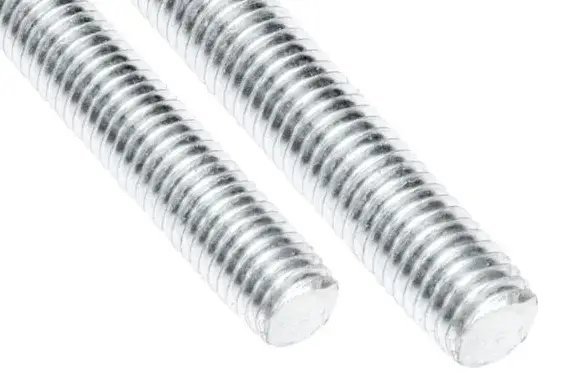
Why Would You Use a Rod Coupler?
A rod coupler is used to connect two threaded rods, studs, or anchor bolts so they can function as one longer continuous assembly. It is commonly used in construction, steel structures, machinery installation, pipe supports, seismic bracing, bridge work, foundation anchoring, and industrial fastening systems.
In many projects, the required rod length is longer than a standard threaded rod or anchor bolt. Instead of ordering a custom-length fastener or replacing an embedded rod, a coupler provides a practical way to extend or join threaded components. In anchor bolt systems, an Anchor Coupler can help connect embedded anchors with upper threaded rods, base plate assemblies, or structural components.
What Is a Rod Coupler?
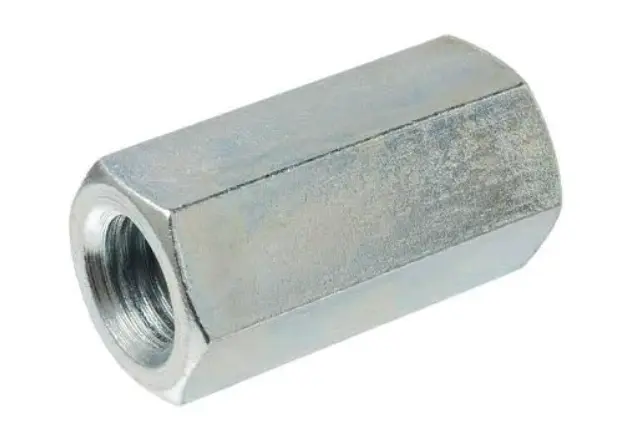
A rod coupler, also called a coupling nut, threaded coupler, extension nut, or anchor coupler, is an internally threaded metal connector. It is designed to receive the threaded ends of two rods from opposite directions.
When both rods are correctly inserted and tightened, the coupler creates a mechanical connection that can transfer tension, alignment force, and fastening load through the assembly.
Rod couplers are usually made from carbon steel, alloy steel, stainless steel, or other engineered metals. They may be plain, zinc plated, hot-dip galvanized, black oxide coated, or specially coated for corrosion resistance.
Main Reasons to Use a Rod Coupler
1. Extending Threaded Rod Length
The most common reason to use a rod coupler is to extend threaded rod length. Standard rods may not be long enough for deep embedment, thick assemblies, suspended systems, or structural connections.
A coupler allows installers to connect two rods and reach the required length without replacing the entire assembly.
2. Connecting Anchor Bolts
In foundation work, anchor bolts may be embedded in concrete and later connected to threaded extensions. An Anchor Coupler can be used to join the embedded anchor rod with another threaded rod section above the concrete surface.
This is useful for base plates, equipment mounting, steel columns, and structural supports where exposed rod length must be adjusted or extended.
3. Supporting Suspended Systems
Rod couplers are frequently used in suspended ceilings, pipe hangers, cable trays, HVAC systems, fire protection lines, and electrical supports. They help create continuous threaded rod drops from overhead structures.
4. Repairing or Adapting Existing Installations
In retrofit projects, existing threaded rods or anchor bolts may be too short, damaged at the top, or located below the required connection point. A coupler can help adapt the existing hardware to the new installation.
However, repairs involving structural loads should be reviewed by a qualified engineer.
5. Improving Installation Flexibility
Rod couplers make field installation more flexible. Installers can assemble rod sections in stages, adjust lengths, and connect components in confined areas where handling one long rod would be difficult.
How a Rod Coupler Works
A rod coupler works by thread engagement. Each rod threads into one side of the coupler. The strength of the connection depends on how much thread is engaged and whether the coupler material matches the load requirement.
Important performance factors include:
-
Thread diameter
-
Thread pitch
-
Engagement length
-
Coupler length
-
Coupler material grade
-
Rod material grade
-
Coating thickness
-
Thread accuracy
-
Alignment
-
Installation torque
If the rods are not engaged deeply enough, the connection may not achieve its intended strength. If the rods are misaligned, bending stress can reduce performance.
Standard Couplers vs. Anchor Couplers
A standard rod coupler may be used for general threaded rod connections. An Anchor Coupler is often used in anchoring systems where threaded rods or anchor bolts must transfer structural or equipment loads.
Anchor couplers may require more careful selection because the connection can affect the performance of a foundation, base plate, column, or heavy equipment installation.
In these applications, coupler strength should match the rod grade and project design requirements.
Common Types of Rod Couplers
Standard Hex Couplers
These are the most common couplers. They have a hexagonal outside shape for wrench tightening and internal threads through the length.
Heavy-Duty Couplers
Heavy-duty couplers may have larger dimensions or higher-strength material for demanding applications.
Reducing Couplers
Reducing couplers connect two rods of different diameters. They are useful when transitioning between thread sizes.
Long Coupling Nuts
Longer couplers provide greater thread engagement and may improve alignment in certain applications.
Custom Couplers
Custom couplers may be manufactured for special thread forms, nonstandard lengths, special coatings, or high-strength project requirements.
How to Choose the Right Rod Coupler
Before selecting a rod coupler, confirm:
-
Rod diameter
-
Thread pitch
-
Rod grade
-
Required tensile strength
-
Coupler material
-
Coating requirement
-
Environmental exposure
-
Required engagement depth
-
Installation method
-
Load direction
-
Applicable design standard
-
Compatibility with nuts and washers
A low-strength coupler should not be used with high-strength rods unless the engineering design allows it. The coupler can become the weak point in the connection.
Material and Coating Selection
For indoor dry applications, zinc-plated or plain carbon steel couplers may be sufficient. For outdoor construction, humid areas, or exposed steelwork, hot-dip galvanized or stainless steel couplers may be more suitable.
In marine, chemical, or highly corrosive environments, corrosion resistance is especially important. Coating should also be compatible with the threads. Excessive coating thickness can affect fit if threads are not properly manufactured or cleaned.
Installation Tips
For reliable installation:
-
Check that rod and coupler threads match.
-
Clean dirt, rust, and debris from threads.
-
Avoid cross-threading.
-
Ensure proper thread engagement on both sides.
-
Keep rods aligned.
-
Use lock nuts where required.
-
Tighten according to project specifications.
-
Inspect the connection before loading.
-
Do not modify structural couplers without approval.
In critical applications, installation should follow the engineering drawings and inspection requirements.
Common Mistakes to Avoid
One common mistake is using a coupler that is weaker than the rods. Another is failing to engage enough threads. A third is using mismatched thread pitch, which can damage the connection.
Other mistakes include:
-
Using couplers in bending instead of tension
-
Ignoring corrosion exposure
-
Mixing incompatible coatings
-
Over-tightening and damaging threads
-
Using damaged or worn couplers
-
Assuming all coupling nuts have the same strength
These errors can reduce reliability and create safety risks.
Conclusion
You would use a rod coupler when you need to extend, join, repair, or adapt threaded rods, studs, or anchor bolts. It provides a practical connection method for construction, suspended systems, equipment installation, foundation anchoring, and structural fastening.
An Anchor Coupler is especially useful when anchor rods or bolts must be connected as part of a load-bearing assembly. The right coupler should match thread size, material grade, coating, engagement length, and project load requirements. Proper selection and installation help create a strong, reliable, and durable threaded connection.
For anchor bolt and anchor coupler product information, visit JF Anchor Bolt.