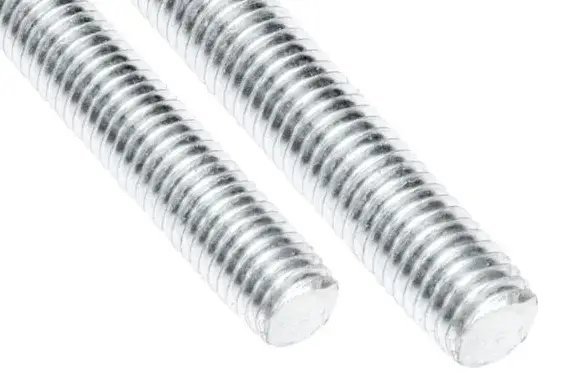
What Is a Thread Bar Used For? Construction and Industrial Uses
A thread bar is used to create strong, adjustable, and load-bearing connections in construction, civil engineering, mining, tunneling, formwork, structural anchoring, and industrial fastening. It is a long steel bar with continuous or partial threads along its length, allowing nuts, couplers, plates, washers, and anchors to be installed at different positions.
Compared with a standard bolt, a thread bar offers more flexibility. It can be cut to length, joined with couplers, tensioned, embedded in concrete, or used in temporary and permanent structural systems. This makes it valuable in projects where length adjustment, high tensile strength, or deep anchoring is required.
More Than a Long Bolt
A thread bar may look simple, but in engineering work it often carries serious load. It can hold formwork together during concrete pouring, secure steel structures to foundations, stabilize slopes, support tunnel walls, or connect heavy equipment to a base.
The threaded design allows installers to position nuts and plates accurately. This adjustability is one reason thread bars are used in demanding field conditions where exact dimensions may change during installation.
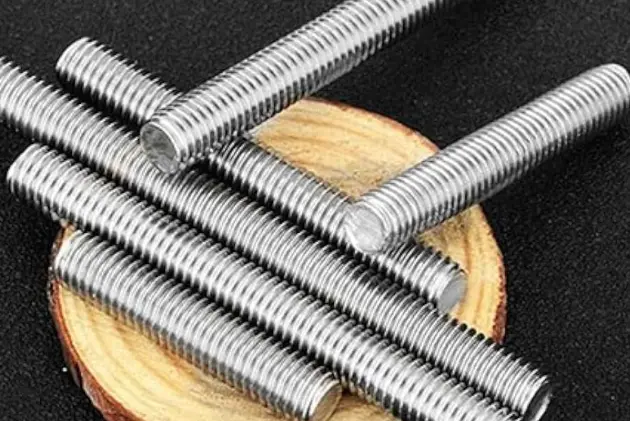
Common Uses of Thread Bars
1. Construction Anchoring
Thread bars are often used as anchor rods in concrete foundations. They can secure columns, base plates, machinery, frames, and support structures.
In this application, part of the bar may be embedded in concrete, while the exposed threaded portion allows nuts and washers to clamp the structure in place.
2. Formwork and Tie Rod Systems
In concrete formwork, thread bars help hold form panels together while wet concrete applies pressure. Nuts, washers, wing nuts, plates, or cones are installed on the bar to keep the formwork stable.
After the concrete sets, some systems allow the bar to be removed and reused, while others leave part of the anchoring system in place.
3. Slope Stabilization
In geotechnical engineering, thread bars may be used as soil nails, rock bolts, or anchor bars. They help stabilize slopes, retaining walls, excavations, and rock faces.
The bar may be inserted into a drilled hole and bonded with grout. A plate and nut at the surface help transfer load from the ground into the anchor system.
4. Tunneling and Mining
Tunnels and mines often require ground support systems. Thread bars are used to help secure rock surfaces, support mesh, hold plates, and improve stability in underground environments.
The ability to install couplers, nuts, and plates makes the thread bar useful in confined and irregular spaces.
5. Industrial Fastening
Factories and equipment installers use thread bars for machinery bases, pipe supports, structural frames, platforms, and custom fastening systems. Because the bar can be cut to the required length, it is useful for nonstandard assemblies.
Thread Bar vs. Threaded Rod
The terms thread bar and threaded rod are sometimes used interchangeably, but there can be differences depending on the industry.
A threaded rod often refers to a general-purpose fully threaded fastener used in building services, pipe hanging, light structural work, and mechanical assembly.
A thread bar may refer to a heavier-duty bar used in anchoring, post-tensioning, geotechnical work, formwork, or structural applications. It may have higher strength, larger diameter, special thread form, or specific mechanical properties.
Buyers should always check the specification rather than relying only on the name.
Why Continuous Threading Is Useful
Continuous threading allows nuts and couplers to be installed anywhere along the bar. This gives installers flexibility during assembly.
Benefits include:
- Easy length adjustment
- Simple coupling
- Fast nut positioning
- Compatibility with plates and washers
- Field cutting options
- Useful alignment control
- Strong tension connection
This is especially helpful when working with concrete, steel, rock, or formwork where exact dimensions may not be perfectly predictable.
Materials and Strength Grades
Most thread bars are made from carbon steel, alloy steel, or stainless steel. The right material depends on load requirement and environment.
For heavy construction, high-strength steel may be required. For corrosive environments, galvanized, epoxy-coated, or stainless steel options may be used.
Key properties include:
- Tensile strength
- Yield strength
- Elongation
- Thread accuracy
- Diameter tolerance
- Surface finish
- Corrosion resistance
- Bend performance when required
A low-grade bar should not be used in a high-load anchoring system.
Coatings and Corrosion Protection
Corrosion can reduce the long-term strength of exposed steel. In outdoor, underground, marine, humid, or chemically aggressive environments, corrosion protection becomes important.
Common protection methods include:
- Hot-dip galvanizing
- Zinc plating
- Epoxy coating
- Grease and sheath systems
- Stainless steel material
- Protective caps
- Grout encapsulation
The coating must also work with nuts and couplers. If coating thickness affects thread fit, installation can become difficult or unreliable.
How to Choose the Right Thread Bar
Before ordering a thread bar, buyers should confirm:
- Diameter
- Length
- Thread type
- Steel grade
- Tensile capacity
- Nut and coupler compatibility
- Plate and washer size
- Coating requirement
- Application type
- Load direction
- Installation method
- Environmental exposure
- Project standards
- Inspection requirements
For structural, geotechnical, or safety-critical use, engineers should specify the required grade and installation details.
Installation Considerations
Correct installation is essential. A strong bar can fail to perform if the hole is poorly drilled, grout is weak, nuts are under-tightened, or the bar is damaged during handling.
Good practice includes:
- Keep threads clean.
- Avoid cross-threading nuts.
- Use compatible couplers.
- Follow torque or tension requirements.
- Protect exposed threads.
- Confirm embedment depth.
- Use proper grout where required.
- Inspect for bending or cracks.
- Avoid unauthorized field welding.
- Follow engineering drawings.
Common Buying Mistakes
One common mistake is choosing only by diameter. Two bars with the same diameter may have very different strength grades.
Another mistake is ignoring accessories. Nuts, couplers, washers, plates, and anchors must match the bar system.
A third mistake is overlooking corrosion. A bare steel thread bar may not be suitable for long-term outdoor or underground exposure without protection.
Conclusion
A thread bar is used for strong, adjustable fastening and anchoring in construction, formwork, tunneling, mining, slope stabilization, and industrial equipment installation. Its threaded design allows nuts, plates, washers, and couplers to be positioned along the bar, making it flexible for both temporary and permanent systems.
The right thread bar should match the load requirement, thread form, steel grade, coating, accessories, and installation environment. Careful selection improves safety, durability, and performance in demanding construction and industrial applications.
For thread bar and anchor fastening product information, visit JF Anchor Bolt.