

How Much Weight Can a M16 Eye Bolt Hold? Safety and Load Guide
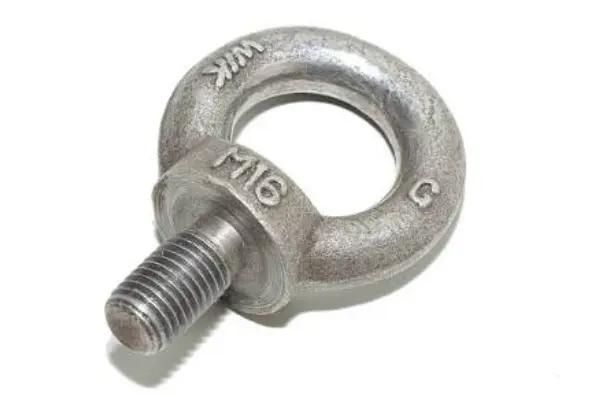
An M16 eye bolt does not have one universal safe lifting capacity. “M16” only identifies the nominal thread size; it does not by itself confirm the material grade, manufacturing standard, design type, rated working load, or suitability for lifting.
To determine how much weight an m16 eye bolt can safely hold, users must check the manufacturer’s marked or documented Working Load Limit (WLL), the intended loading direction, thread engagement, installation method, and the strength of the component receiving the bolt.
For lifting applications, never estimate safe capacity from thread diameter alone. Use the specific product’s approved load rating and the applicable lifting plan.
What Does M16 Mean on an Eye Bolt?
M16 refers to the metric thread size of the eye bolt. The “M” indicates a metric thread, while “16” refers to the nominal thread diameter in millimetres.
However, two products with M16 threads may have very different load capabilities. Their performance can vary because of differences in:
- Material and mechanical properties
- Forged or formed construction
- Product design and eye geometry
- Manufacturing standard
- Heat treatment
- Thread length and engagement
- Surface treatment or corrosion condition
- Approved loading direction
- Manufacturer testing and marking
For this reason, an M16 thread is a dimensional description—not a lifting rating.
Why an M16 Eye Bolt Has No Single Weight Rating
It is common to search for one simple number, but a safe answer depends on the complete lifting arrangement.
A correctly specified m16 eye bolt may be designed for lifting within a defined working load limit. Another M16 eye bolt may be intended only for general fastening, anchoring, light attachment, or non-lifting use. Even products that look similar should not be treated as interchangeable.
The rated working load must come from the manufacturer’s product documentation, product marking, or approved technical data. The rating must also match the actual installation and loading conditions.
Working Load Limit vs. Break Load
When evaluating an eye bolt, buyers should understand the difference between working load and failure-related values.
Working Load Limit
The Working Load Limit, often called WLL, is the maximum load permitted for normal use under the product’s stated conditions. It is the relevant value for lifting selection.
Break Load or Ultimate Strength
Break load describes the force at which failure may occur during testing. It is not a safe lifting capacity and should not be used as an operating load.
Using break-load information as a lifting limit creates a serious safety risk. A lifting component must be selected according to its approved working load, not according to a theoretical failure value.
Loading Direction Can Change the Capacity
Eye bolts are often strongest when the load is applied in the intended direction. Side loading, angular loading, or pulling across the eye can reduce the allowable lifting capacity.
Before selecting an m16 eye bolt, confirm whether the load will be:
- A straight vertical lift
- An angled lift
- A side load
- A multi-leg sling arrangement
- A rotating or dynamic load
- A load exposed to shock or vibration
An eye bolt that is acceptable for a straight pull may not be suitable for angular lifting. The manufacturer’s instructions should always be followed for the intended loading orientation.
Thread Engagement and Base Material Matter
The eye bolt is only one part of the lifting connection. Even a correctly rated product can become unsafe if it is improperly installed.
Important installation factors include:
- Sufficient thread engagement
- Correct thread pitch and matching internal thread
- Clean, undamaged threads
- Proper seating against the mounting surface
- Suitable thickness and strength of the receiving material
- No cross-threading or partial engagement
- No unauthorized modification
- No visible bending, cracking, corrosion, or wear
If the component being lifted has weak, thin, damaged, or incompatible threaded material, the connection may fail before the eye bolt reaches its rated working load.
Can an M16 Eye Bolt Be Used for Overhead Lifting?
Only use an M16 eye bolt for overhead lifting when it is specifically designed, rated, marked, and approved for that purpose. The complete lifting assembly must also be suitable for the job.
Do not assume that every eye-shaped fastener can be used for hoisting. Decorative eye bolts, general-purpose fasteners, and unmarked products may not be appropriate for lifting.
For overhead lifting, buyers should verify:
- The manufacturer’s stated WLL
- The approved loading direction
- The product material and construction
- The thread engagement requirement
- The receiving material strength
- The sling, hook, shackle, or lifting accessory compatibility
- The condition of the eye bolt before each use
- The site’s lifting procedure and safety requirements
How to Choose the Right M16 Eye Bolt
A reliable purchasing decision starts with the application, not with the thread size alone.
When requesting a quote or technical confirmation, provide:
- Required thread size and pitch
- Required thread length
- Intended lifting or fastening application
- Required working load
- Load direction and lifting angle
- Base material and threaded hole details
- Environmental conditions
- Surface finish or corrosion-resistance requirement
- Quantity and delivery requirement
- Drawings or project specifications, if available
This information helps ensure that the selected m16 eye bolt matches the actual operating condition.
Common Mistakes to Avoid
Several mistakes can lead to unsafe use or incorrect purchasing.
Assuming All M16 Eye Bolts Are Equivalent
Products with the same thread size may differ in design, material, quality level, and intended use.
Using an Unmarked Product for Lifting
If the product does not have reliable identification, technical data, or a stated lifting rating, it should not be assumed suitable for overhead lifting.
Ignoring Side Loading
A side pull or angled pull can significantly change how an eye bolt performs. Always review the approved loading direction.
Using Damaged or Modified Eye Bolts
Bent eyes, worn threads, severe corrosion, unauthorized welding, grinding, or other modifications can compromise product integrity.
Forgetting the Connection Point
The eye bolt, threaded hole, surrounding structure, lifting accessory, and load must all be evaluated as one system.
Conclusion
How much weight can an M16 eye bolt hold? The correct answer is: it depends on the specific product’s rated Working Load Limit and the actual installation conditions.
Thread size alone cannot determine safe lifting capacity. For any lifting application, confirm the manufacturer’s WLL, product type, material, installation requirement, loading direction, and compatibility with the complete lifting system. When safety is critical, obtain technical confirmation before purchase or use.
For m16 eye bolt sourcing, custom thread requirements, and project-specific fastener support, contact our team.
FAQ
Does M16 mean an eye bolt can lift a specific weight?
No. M16 only identifies the nominal metric thread size. The safe lifting capacity must come from the manufacturer’s stated Working Load Limit for the exact eye bolt model.
Can I use any M16 eye bolt for lifting?
No. Only use products specifically designed, rated, and approved for the intended lifting application.
Can side loading reduce eye bolt capacity?
Yes. Side loading and angular loading can affect safe use. Follow the manufacturer’s instructions for permitted loading directions.
Is thread engagement important for an M16 eye bolt?
Yes. Insufficient thread engagement, damaged threads, or weak base material can reduce connection strength and create a safety risk.
What should I check before buying an M16 eye bolt?
Confirm the product’s WLL, material, design, thread length, loading direction, application environment, installation details, and supplier technical documentation.