What Is a Split Set Bolt?
A split set bolt is a friction-type rock support element used to stabilize rock surfaces in underground mining, tunneling, slope support, and other geotechnical applications. Unlike fully grouted bolts that rely mainly on bonding materials, a split set bolt creates immediate support through friction between the bolt tube and the drilled hole wall.
The design is simple but effective. A split set bolt is usually made from a steel tube with a longitudinal slot along its length. When the tube is driven into a slightly smaller drill hole, the slot allows the tube to compress. As it tries to expand back outward, it creates continuous radial pressure against the surrounding rock. This pressure produces friction, helping hold the rock mass together.
For contractors and mine operators, the main value of a Split Set Rock Bolt is fast installation and immediate load resistance. In working areas where ground conditions can change quickly, immediate support can be a major advantage.
How a Split Set Bolt Works
The working principle of a split set bolt is mechanical friction. First, a hole is drilled into the rock at the specified diameter and depth. The bolt is then inserted with a bearing plate and driven into the hole using impact equipment.
Because the bolt diameter is slightly larger than the hole diameter, the tube compresses during installation. The slotted shape allows this compression to happen without breaking the tube. Once installed, the steel tube pushes against the rock wall along its full length.
This full-length contact is important. Instead of support acting only at one point, friction is distributed along the bolt body. As the rock moves or opens slightly, the bolt resists movement through its contact pressure and steel strength.
Where Split Set Bolts Are Used
Split set bolts are widely used in underground excavation environments where quick, practical rock reinforcement is required. Common applications include mine roadways, tunnels, underground chambers, temporary support zones, slope stabilization, and civil engineering excavations.
They are especially useful in areas where speed matters. Since the bolt does not require resin curing or cement grout setting time, workers can install it and continue support work quickly. This makes it suitable for production mining and temporary reinforcement where fast cycle times are important.
A Split Set Rock Bolt may also be used with mesh, bearing plates, straps, or shotcrete as part of a combined ground support system. The correct support design depends on rock type, stress conditions, excavation size, and project safety requirements.
Main Components of a Split Set Bolt System
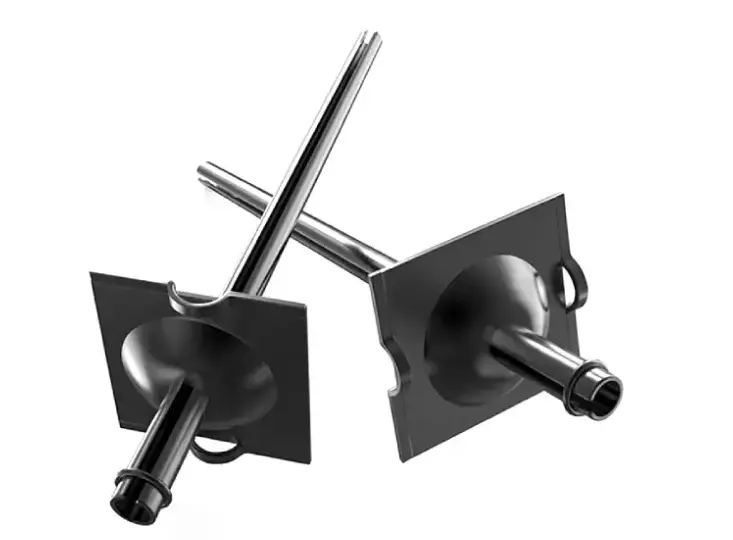
A typical split set support system includes several parts:
-
Slotted steel tube
-
Bearing plate
-
Domed washer or collar, depending on design
-
Drill hole matched to bolt diameter
-
Installation driver or adapter
-
Optional mesh or surface support
The bearing plate is not a decorative part. It helps distribute load at the rock surface and holds mesh or straps in position. If the plate is too weak, too small, or incorrectly installed, the overall support performance can be reduced.
Advantages of Split Set Bolts
One of the biggest advantages of split set bolts is immediate support. Once installed correctly, they begin working without waiting for chemical or cement curing.
They are also relatively simple to install. This can reduce training complexity, speed up excavation cycles, and make support operations more consistent in busy underground projects.
Other practical advantages include full-length friction support, adaptability to many rock support layouts, compatibility with mesh and plates, and suitability for mechanized installation. In many projects, the split set bolt is valued because it combines fast installation with dependable basic reinforcement.
Limitations Buyers Should Understand
Although split set bolts are useful, they are not the right answer for every ground condition. Their performance depends strongly on hole diameter, rock quality, corrosion environment, steel quality, and installation accuracy.
If the drill hole is too large, friction may be insufficient. If the hole is too small, the bolt may be difficult to install or may deform excessively. In highly fractured, soft, wet, or corrosive conditions, engineers may need additional support measures or different bolt types.
Corrosion is another important consideration. Underground environments can expose bolts to moisture, acidic water, salts, or other aggressive conditions. Galvanized or coated options may be considered where longer service life is required.
How to Choose the Right Split Set Rock Bolt
When selecting a split set bolt, buyers should evaluate both the product specification and the site conditions. Important factors include bolt diameter, bolt length, steel grade, wall thickness, surface treatment, plate size, hole diameter, and expected support life.
The bolt should match the drilling equipment and installation method used on site. A strong bolt with the wrong hole size may not perform as expected. Similarly, a suitable bolt installed with poor alignment or insufficient driving depth can reduce support quality.
For procurement teams, consistent manufacturing quality is also important. Tube dimensions, slot width, steel strength, surface finish, and packaging quality can all affect installation and performance.
Installation Quality and Field Checks
A split set bolt must be installed according to the ground support design. Workers should confirm hole depth, hole diameter, bolt length, bearing plate placement, and installation angle before and during installation.
Field pull testing may be used in some projects to check performance. Regular inspection can also help identify loose plates, damaged bolts, corrosion, or rock movement around supported areas.
Because ground support is a safety-critical system, product selection and installation should always follow project engineering requirements and local safety standards.
Final Thoughts
A split set bolt is a friction rock bolt designed to provide immediate support in underground mining, tunneling, and geotechnical reinforcement. Its slotted steel tube compresses during installation and presses outward against the drill hole, creating friction along the bolt length.
The key benefits are fast installation, immediate support, and practical compatibility with mesh and plates. However, a Split Set Rock Bolt must be matched carefully to hole diameter, ground conditions, corrosion exposure, and support design.
For split set bolt and anchor support product information, visit JF Anchor Bolt.