Mastering Types of Eye Bolts, Load Ratings, Loading, and the Right Lifting Point for Every Lift
When you walk onto a bustling job site, you see massive steel components being moved safely every single hour. Have you ever wondered what keeps those massive loads secure in the air? Often, it is a single, heavy-duty loop of steel. We are going to dive deep into everything you need to know about these critical tools. Understanding how to properly handle loading and calculate load ratings is not just about finishing a job. Safe loading is about keeping everyone on your team alive. This guide to eye bolts will break down the rules for every lift. A successful lift requires a solid lifting point. Proper loading techniques matter immensely. The loading on the eye bolt dictates the overall safety of the lift. Let’s secure that knowledge together and ensure zero downtime for your operations.
What are the main types of eye bolts used in heavy lift operations?
If you are looking for eye bolts, you might feel overwhelmed by the choices for your lift. There are three main types you will encounter when setting up your loading strategies. Each lift requires specific tools. You cannot just grab the first piece of steel you see in the hardware bin. The eye bolt types generally fall into three distinct categories. First, we have plain eye bolts. These are designed strictly for straight loading pulls during a vertical lift. Next, we have machinery variants, followed by machinery eye bolts, which handle heavy manufacturing loading tasks. Finally, shoulder variations exist to manage angular loading. The specific eye bolts used on your lift must match the loading demands perfectly. When you are assembling your lifting accessories, getting the right lifting hardware for the lift is step one.“Safety is not an accident. Proper loading requires proper knowledge of your gear.”
Are you choosing a shoulder eye bolt or a plain eye bolt for your lifting point?
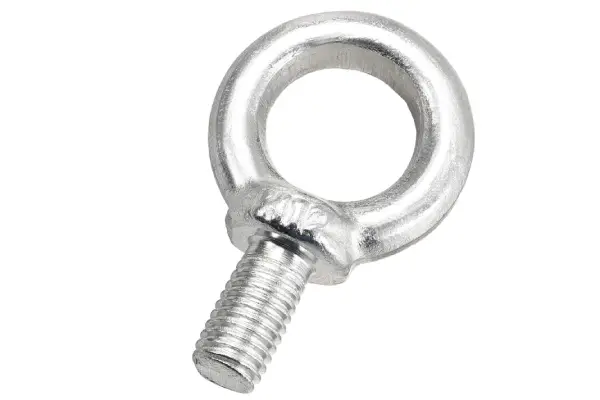
The shape of the metal tells a big story about its loading capabilities. A shoulder eye bolt features a very specific design. It has a large collar (or shoulder) right where the stem meets the loop. This shoulder provides crucial support against side-loading pulls during a complex lift. These shoulder eyebolts are suitable for a lift where the loading is angled. On the other hand, plain designs have no shoulder at all. The eye and the screwthread meet flush with the straight shaft. You must never use plain models for angular lifting. If the load direction shifts, bad loading snaps the metal immediately. For an angled lift, use a lifting point designed for that specific loading. Choosing the right eye bolt means knowing your lift angles. Sometimes, a standard Bolt setup simply won’t handle the heavy lift stresses, and you need specialized rigging.
How does angular loading affect the lifting capacity of an eye bolt?
Here is a hard truth about steel: even the strongest eye bolt loses power when pulled sideways. When loading happens at an angle, the working load limit drops dramatically. A 45-degree angle can cut your safe loading weight by amassive 70%. Your working load capacity must be recalculated for every angled lift. Specific bolts for angular pulls must be carefully selected. When you apply angular loads, you put massive stress on the base of the metal. Because of this, the true lifting capacity changes rapidly. If you pull at an angle, you must check the manufacturer’s chart to find the reduced strength. Otherwise, the eyebolts may break mid-air. Proper load distribution across the sling must be evento prevent sudden loading shocks during the lift.
| Pull Angle (Degrees) | Load Reduction (%) | Safe Loading Capacity left |
|---|---|---|
| 0° (Straight Vertical) | 0% | 100% |
| 15° | 20% | 80% |
| 45° | 70% | 30% |
| 90° | Not Recommended | 0% |
What happens if an eye bolt starts to bend during a lift?
If you see your hardware start to bend, stop the lift immediately! A bent piece. The steel has lost its structural integrity. You must never try to straighten it out and reuse it for another lift. Once they bend, the working load rating drops to zero. Throw the damaged piece away and grab a new one. Why do they bend? Usually, it happens because of improper loading angles or extreme overloading. When tensioning a sling, the forces must be perfectly aligned. You must align the eye with the pull direction flawlessly. The eye must always face the direction of the force. If it is twisted, you are asking for a catastrophic failure.
Should you use a swivel hoist ring instead of a fixed eye bolt?
Sometimes, a standard fixed eye bolt has severe limitations. If the load direction shifts as the item moves, a fixed loop will catch, bind, and twist. This is incredibly dangerous for any lift. In these cases, you might want to use a swivel hoist ring instead. These hoist rings can spin a full 360 degrees and pivot cleanly 180 degrees. This means the loop always points perfectly toward the sling. This constant alignment keeps the loading forces right where they belong. The swivel action protects the thread from lateral twisting forces. An eye bolt rated for an angled pull is good, but a swivel hoist ring is often much safer for complex heavy lifting equipment.
How important is full thread engagement for load ratings?
It is absolutely vital. You cannot just screw a fastener in halfway and expect it to hold a lift. For safe loading, you need full thread engagement. The entire length of the shank must sit deep inside the tapped hole. The thread providesthe friction and shear strength needed to hold the weight. If the tapped hole is too shallow, the shoulder must sit above the tapped surface. This leaves a dangerous gap in the shank. A gap means the shaft takes all the bending force, and it will snap. To fix a gap, you can use washers to shim the space so it rests flush on the mounting surface. Ensure you use the right heavy-duty Washer to fill that space securely. A machined face provides a perfectly flat area for seating. If it does not sit flat, it will fail if installed incorrectly.
What eye bolt materials matter most: stainless steel or forged carbon steel?
The metal composition defines the hardware. Common eye bolt materials include two primary options. We use stainless steel and forged carbon steel to handle rough industrial environments. Your choice dictates the success of your lift. While stainless steel resists rust beautifully, it is slightly softer. Stainless steel is great if you are working near the ocean, but for maximum heavy loading, forged carbon steel is the absolute king. The drop forge process aligns the grain of the metal, making it incredibly tough. Quality eye bolts made in a strong forge can take massive abuse. Whether you use stainless or carbon, always check the load limits. For deep underground supports, much like a Threaded steelanchor, we rely on high-yield steel because operations demand zero downtime.
Why is the pivot action of swivel eye bolts crucial?
Using swivel eye bolts gives you a hybrid tool. It is part bolt, part swivel. The ability to turn and align gives you incredible flexibility during a lift. When managing an awkward shape, the load might swing unexpectedly. The swivel allows the ring to adjust and align with the swing, preventing dangerous loadingshocks. This prevents sideways force on the thread. The swivel action is a lifesaver in tight spaces, and these units are available in a wide range of sizes. They are highly valued tools when you have two or more lifting points on a massive,odd-shaped casting. It acts like a flexible shackle attached directly to the base, providing reliable loading stability.
Are screw eye bolts and lag eye bolts safe for overhead lifting and rigging applications?
Let’s clear this up right now to prevent accidents. Never trust screw eye bolts or lag eye bolts for overhead lifting. Period. A screw is meant for wood. It does not have the grip strength for an industrial lift. A screw thread is fine for a simple tie-down or hanging a shop light. But for lifting and rigging applications, they are deadly. The screw can easily pull right out of the timber under a sudden loading shock. For any real lift, use proper load-rated eye bolts, screwing directly into solid steel. Only standard eye bolts fastened into tapped steel should be used for overhead loading safety.
How to correctly calculate WLL and check the safety factor before a lift?
Every single piece of hardware has a limit. The capacity of an eye bolt is clearly stated by the manufacturer. This is known as the WLL. If the WLL is 5,000 lbs, that is the maximum weight you can lift. Do not guess your loading numbers! The built-in safety factor is designed for emergencies, not everyday use. A 5:1Margin means the piece broke at 25,000 lbs in the testing lab. But you must never exceed the given WLL. If a part of the load shifts during a complex lift with a heavy shackle and chain, one corner might suddenly take all the loading. Always calculate the maximum possible loading on a single point. If the math is right, upgrade your gear.
What lifting operations standards, like ASME B30.26, apply to hoist rings?
Safety is governed by strict rules. The standard ASME B30.26 dictates therequirements in the USA. Following ASME ensures that all detachable lifting points, including hoist rings, turnbuckles, and lifting eye systems, are safe for loading. These eye bolts feature strict marking requirements. You should see themanufacturer’s name, size, and grade right on the metal. If it has no markings, do not use it for a lift. Strict guidelines exist for safe lifting operations. If left in place permanently, it is treated as a permanent lifting fixture and requires regular inspections. The correct selection of lifting gear means everyone goes home safe. A small countersink helps the collar sit flat, meeting standard rules. Heavy machinery and gear used for lifting require absolute precision. While eye bolts are typically simple-looking, they are complex when used to lift heavy items. As massive ring bolts do, they act as a solid anchor for the whole operation. Just as you would secure a Mushroom Head Dome Nut to protect a critical thread, you protect your team by following the loading regulations to the letter.