Flat Head Screw Guide: Fastener Types and Uses & Screws vs Other Head Screw Options
When building, selecting the right fastener is critical. You must make informed decisions when looking at the range of applications for different hardware. A standard screw is one of the most versatile tools, but which screw to use depends heavily on your specific needs. The characteristics of flat head options make them stand out. Notably, flat head screws are designed to merge seamlessly with the material. This countersunk head shape ensures that the screw body and top sit completely flush. This unique geometry allows the screw to sit perfectly even with your workpiece.
What is a Flat Head Screw? Characteristics of the Screw Head
The primary design of flat head screws includes a flat top and a conical bearing surface beneath. This design of flat hardware means they require a countersunk hole so that the screw head sits flush against the surface of the material. Because the screw head does not protrude, this design allows for a highly aesthetically pleasing finish. Flat head screws offer an excellent ability to sit flush, making them the top choice for applications where nothing should catch on the surface. For example, they are widely used to attach hardware like a hinge to a door frame, preventing the mechanism from binding. Their flush profile helps in reducing the risk of items catching and minimizing the risk of snagging.
Common Types of Flat Head Screws
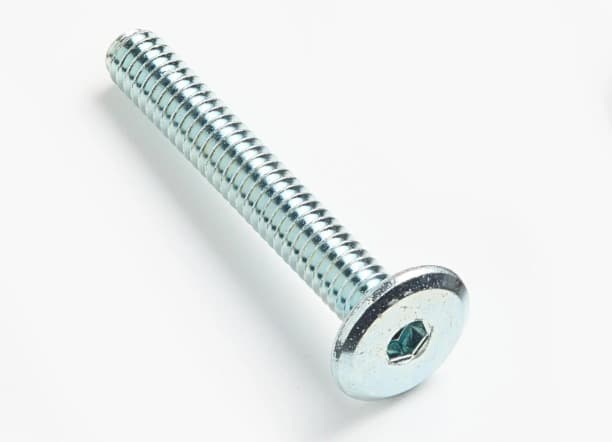
There are several types of flat head screws available, manufactured from various materials, including stainless steel for durability and resistance to rust. The main types include wood variants and the flat head machine screw. You will also find self-tapping screws with a flat top, making them suitable for tasks where pre-drilling isn’t optimal. Flat head screws are also available with various drive types, such as a straight slot, a standard Phillips head, or Torx. When using a manual screwdriver or a power drill, applying proper torque is essential to avoid stripping the slot. These different versions give builders the flexibility to fasten components precisely.
Difference Between Flat and Round Head Screw Types
When evaluating round head and round top options, you’ll want to note the distinctions. What is the difference between flat top fasteners and round ones? The two types of screws have distinct roles. Round head screws provide a domed top. Round head screws are ideal for situations where a countersink would increase the risk of damage. The differences between these two types are mostly about clearance and aesthetics. Conversely, flat head screws are often used when a taper fits perfectly into the material, making them ideal for seamless finishes.
Exploring the Phillips Screw vs Flat Head Options
People sometimes confuse head shape with drive type. A Phillips screw refers strictly to the cross-shaped drive recess. You can easily have Phillips head screws that are also flat-topped! The cross-head design provides good grip and ease of use. When finding the right screw, remember that screws are typically classified by both their top shape and their drive style.
Choosing the Right Type of Screw
These flat fasteners excel in applications where a smooth surface is desired. In any project where a completely smooth surface is required, flat head screws are indispensable. They are frequently used to secure components safely. You will find that flat head screws are commonly used in applications involving automotive applications and aerospace because they reduce drag. They are also ideal for use in furniture and cabinetry, as well as other materials like wood. In fine cabinetry, giving a smooth and clean look is paramount.
What is the Disadvantage of a Flat Head Screw?
The main disadvantage of a flat top option is that it requires extra prep work. If not pre-drilled correctly, driving the tapered top into wood can cause outward pressure, elevating the risk of splitting. Furthermore, they may not be suitable for very thin sheet metal, as creating the necessary countersink might weaken the sheet. In those cases, round head screws can be used instead. Head screws require careful matching to maintain the integrity of the material. They are screws designed for precision prep.
Industrial Anchors: Rock Bolts, Bits, and Head Screw Hardware
If you are exploring industrial anchors, large flat head screws are often used alongside specialized tools. Industrial equipment involves much more than just a typical screw or a standard flat-head screw.
When you prepare a hole for any type of screw, you need the right drill bits. High-quality Rock Drilling Bits are designed for use in extreme environments.
To complement this, a Tapered drill pipe provides excellent torque transmission. Just like a standard screw head needs a screwdriver, specialized rock drilling requires a Hammer Hand Drill or Shank adapters.
Fastening securely often involves a durable Washer, a sturdy Nut, and a robust Bolt.
In mining, reinforcement meshes like Diamond Mesh, Osro Rod Straps, and Mine welding wire support mesh are anchored using specialized heavy-duty bolts rather than a standard flat-head screw.
Other advanced systems include the Expansion Shell Anchor Bolt, Black Anchor Plated, Mushroom Head Dome Nut, Coupling, and Centralizer.
When standard hardware isn’t enough, professionals turn to the Self-drilling Hollow Anchor or Water Expansion Anchors.
Other specialized anchors include the Threaded steel anchor, Split rock friction anchor, and Fully threaded resin anchor, glass fiber reinforced rod.
Operators might use Multi-specification Rock Thread Drilling Drill Bits. Securing the structure involves a Mine Single/Multi-Hole High-Strength Steel Strand Lock, a Multifunctional Resin Anchoring Agent, and a Fully Threaded Concrete Strand sourced from a trusted self-drilling anchor tools factory.
To master any screw project, understanding screw varieties is vital. A flat head profile ensures a flush fit, but every head screw has a specific purpose. When evaluating a screw, ask if a flat-head screw is better than a round-head screw. A screw driven straight, especially a flat-head screw, gives a seamless look. The countersunk head screw is a classic screw style. Any flat-head design requires a countersink for the screw. Whether it is a tiny wood screw, a machine screw, or a giant industrial head screw, treating the screw with respect prevents damage.
Next time you pick up a screw, consider if it’s the optimal head screw for the job. A flat head might just be the exact screw you need! A flat-head screw is a beautiful screw. The perfect head screw is reliable. When you drive a flat-head screw, the screw will sit flush with the surface. Always trust a good screw, a solid head screw, and a flush flat head screw. In conclusion, a screw is a vital component. Finding the proper screw, whether it is a small screw or a large screw, changes everything. A screw must be driven straight. A screw shouldn’t be over-tightened. When you hold a screw, inspect the screw threads. A screw with damaged threads is a bad screw. Replace an old screw with a new screw. A good head screw is reliable. Always inspect your head screw. The correct screw saves time. Every screw matters. Enjoy your next screw project!